
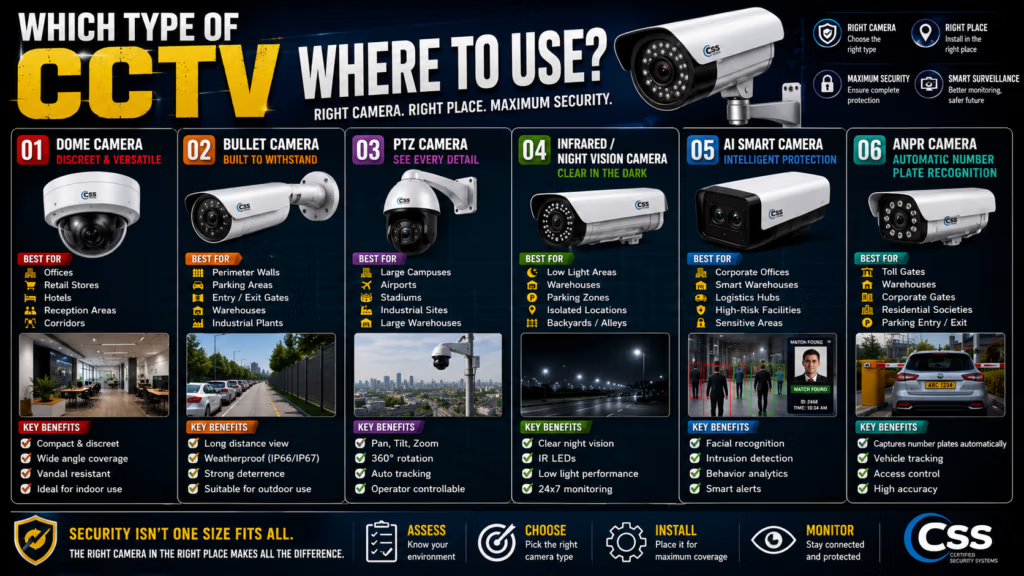
Which Type of CCTV Camera Should You Choose? The Complete Homeowner’s Guide
Choosing a security camera shouldn’t feel like learning a new language. Bullet cameras, turret cameras, dome cameras, PTZ cameras, AI cameras… the options can quickly become overwhelming. The truth is, there isn’t one “best” security camera. The best camera is the one that’s installed in the right location for the job.
After installing thousands of security cameras across Palm Beach County, we’ve learned that every home and every business has different needs. A camera that’s perfect for protecting a warehouse might not be the best choice for a townhouse, and the camera you’d install over a front door may not be the right one for watching a long driveway.
This guide walks you through the six most common types of CCTV cameras, explains where each one performs best, and shares real installation stories from our own customers, along with the two South Florida conditions that affect every camera we install.
This guide focuses on camera types. If you’re still comparing resolution, storage, and wired vs. wireless systems, start with our guide on how to choose home security cameras.
Why Choosing the Right Camera Matters
Many homeowners shop for cameras by comparing prices or megapixels, but those are only part of the equation. The most important question is, “What do you want this camera to accomplish?”
For example, do you want to:
- Deter someone from approaching your home?
- Identify faces at your front door?
- Read license plates at the end of a long driveway?
- Monitor your backyard or dock while you’re away?
- Receive AI alerts only when a person or vehicle is detected?
The answers determine which camera style will perform best. A properly designed surveillance system combines the right camera with the right location, viewing angle, lighting, and recording technology.
Two South Florida Conditions That Affect Every Camera
Most camera guides are written as if every home sits in the same climate. Ours don’t. Before we get into camera types, here are the two local conditions we plan around on nearly every installation in Palm Beach County and the Treasure Coast.
Salt Air Is Hard on Outdoor Equipment
If your home is near the ocean, the Intracoastal, or a canal that opens to the water, salt in the air slowly corrodes metal housings, mounting brackets, screws, and cable connectors. A camera that would last for years inland can start rusting, clouding, or losing connections much sooner on a waterfront property.
What we do on coastal properties:
- Choose cameras specifically rated for corrosion resistance, such as NEMA 4X rated models
- Use stainless steel mounting hardware instead of standard screws
- Seal every cable entry point and connection
- Recommend a periodic fresh-water rinse of housings and lenses
One important note: an IP66 or IP67 rating means a camera is protected from rain and dust. It does not automatically mean the camera is built to resist salt corrosion.
Lightning Can Travel Through Your Camera Cables
Florida sees more lightning than almost anywhere in the country. A strike doesn’t need to hit your house to cause damage. A nearby strike can send a surge through outdoor camera cables and into the PoE switch and NVR, taking out several cameras and the recorder at once.
How we reduce that risk:
- Surge protection on outdoor PoE cable runs
- Extra attention to long runs to gates, docks, detached garages, and barns
- Proper grounding of equipment
- A battery backup (UPS) for the NVR so recording continues through storm-related power interruptions
Keep both of these in mind as you read about each camera type below.
1. Dome Cameras
The Discreet Professional
Dome cameras get their name from the clear dome that surrounds the camera lens. They’re commonly used indoors because they provide excellent coverage while blending into the ceiling. Many businesses choose dome cameras because they look clean, professional, and don’t immediately draw attention.
Best locations include:
- Office buildings
- Retail stores
- Reception areas
- Hotels
- Schools
- Hallways
Advantages:
- Wide viewing angles
- Clean, low-profile appearance
- Excellent for indoor environments
- Many models offer vandal-resistant housings
- Difficult for visitors to determine exactly where the camera is pointing
Potential drawbacks:
- Not as visually intimidating as bullet cameras
- Outdoors, the clear dome can reflect infrared light at night
- Long-distance viewing isn’t their strongest feature
If your goal is dependable indoor surveillance with a professional appearance, dome cameras are an excellent choice. They quietly do their job without becoming the focal point of the room.
2. Bullet Cameras
The Visible Deterrent
If you’ve ever noticed a security camera from across a parking lot, chances are it was a bullet camera. Their long, cylindrical design makes them one of the most recognizable types of surveillance cameras, and for many homeowners and businesses, that’s exactly the point.
Unlike dome cameras that tend to blend into the background, bullet cameras send a clear message: this property is being monitored. Sometimes preventing a crime is just as valuable as recording one.
Best locations include:
- Front entrances
- Driveways
- Side yards
- Backyards
- Parking lots
- Commercial buildings
- Warehouse exteriors
Advantages:
- Highly visible deterrent
- Excellent long-distance viewing
- Easy to adjust and aim
- Weather-resistant for outdoor use
- Available with powerful zoom lenses and AI features
Potential drawbacks:
- More noticeable than other camera styles
- Some homeowners prefer a more discreet appearance
A Real Installation Story From Westlake
One of our favorite installations was for a homeowner in Westlake, Florida. He owned a beautiful townhouse and had already spent weeks researching different camera systems before giving us a call.
He specifically requested a Ubiquiti security camera system. He liked the quality of the equipment, appreciated the ecosystem, and wanted a professionally installed surveillance system that would protect his home for years to come.
When we started discussing camera placement, we recommended turret cameras, our go-to camera for most homes. Then he smiled and said something we don’t hear very often.
“I don’t want my cameras to blend in. I want people to notice them.”
Instead of installing white turret cameras beneath the soffits, he chose black Ubiquiti bullet cameras. Against the lighter exterior of his townhouse, they stood out immediately. His goal was a visible deterrent: anyone walking toward his home would know right away that the property was protected.
Should Cameras Be Hidden or Visible?
It depends on your goals. Some homeowners want cameras that blend into the home. Others want cameras that are impossible to miss because an obvious surveillance system can discourage someone from attempting a break-in in the first place. Both are valid. Our job is to match the camera style to the level of deterrence you want.
See why some homeowners, like our Westlake customer, intentionally choose highly visible security cameras.
3. Turret Cameras
Our Most Recommended Camera for Homes
If you’ve looked through our recent installation photos or videos, you’ve probably noticed one thing: we install a lot of turret cameras. In our experience, they offer one of the best combinations of image quality, reliability, and value for residential security, and they’re often the first camera we recommend for homeowners throughout Palm Beach County.
Best locations include:
- Front doors
- Driveways
- Patios
- Pool areas
- Side gates
- Backyards
- Garage entrances
Advantages:
- Outstanding day and night image quality
- Excellent infrared night vision with minimal glare
- Less likely to attract spider webs than traditional bullet cameras
- Compact, modern appearance
- Easy to position for precise viewing angles
- Available with AI person, vehicle, and pet detection
Potential drawbacks:
- Not as visually intimidating as a large bullet camera
- May not provide the “commercial security” appearance some homeowners prefer
Why We Recommend Turret Cameras So Often
The biggest reason is nighttime performance. Dome cameras can create infrared reflections inside the clear dome, while bullet cameras occasionally attract spider webs near the lens because of the warmth around the infrared LEDs. Turret cameras largely avoid both issues. Their open-face design produces crisp nighttime images without glare.
They also don’t dominate the look of the home. Installed under a soffit or above an entryway, they look clean and professional. For many families, that’s exactly what they want: excellent security without making their house look like a bank.
4. PTZ Cameras
When One Camera Needs to Cover a Large Area
PTZ stands for Pan, Tilt, and Zoom, and these cameras are in a league of their own. Unlike fixed cameras that always watch the same area, PTZ cameras can rotate left and right, tilt up and down, and zoom in on objects hundreds of feet away while maintaining incredible image quality.
Think of a PTZ camera as having a professional camera operator built into the system. With the touch of a button, you can move the camera, zoom in on suspicious activity, or program it to automatically patrol different areas of your property.
Best locations include:
- Large residential estates
- Horse farms and ranches
- Commercial parking lots
- Warehouses
- Marinas and waterfront properties
- Schools
- Industrial facilities
Advantages:
- Covers a much larger area than a fixed camera
- Powerful optical zoom preserves image quality
- Remote control from your smartphone or computer
- Automatic patrol patterns
- Auto-tracking available on many models
Potential drawbacks:
- Higher cost than fixed cameras
- Requires thoughtful placement to maximize coverage
- One camera can only look in one direction at a time unless using programmed patrols
A Waterfront Installation We’ll Never Forget
One of our most memorable PTZ installations was at a beautiful waterfront home in Palm Beach County. The homeowner wanted to keep an eye on his dock, seawall, and the Intracoastal Waterway. A fixed camera simply wouldn’t provide the flexibility he needed. He wanted to check on his boat, watch activity near the dock, and zoom in if something caught his attention.
We installed a 40x optical zoom PTZ camera, giving him the ability to see incredible detail from hundreds of feet away. Using the mobile app, he can pan across the water, tilt down toward the dock, or zoom in on his boat from virtually anywhere.
South Florida tip: a camera facing the Intracoastal lives in salt air every day. On waterfront jobs like this one, we choose corrosion-resistant equipment and stainless hardware, and we put surge protection on the cable run, because a camera mounted near the water and a long outdoor cable are exactly where salt and lightning do their damage.
See our 40x optical zoom PTZ camera monitor an entire dock and the surrounding waterway.
Optical Zoom vs. Digital Zoom
Optical zoom uses the camera’s lens to magnify the image, just like a pair of binoculars. The picture stays sharp because the camera is physically changing its focal length.
Digital zoom simply enlarges the pixels already captured. It may make an object appear closer, but it also reduces image quality.
If your goal is to identify faces, read boat registration numbers, or inspect activity hundreds of feet away, optical zoom is the clear winner.
Is a PTZ Camera Right for Your Property?
For the average home, probably not. Most residential properties are better protected with several strategically placed fixed cameras. But if you own a large estate, horse property, marina, commercial facility, or waterfront home, a PTZ camera paired with fixed turret or bullet cameras provides flexibility that fixed cameras alone can’t match.
5. AI Security Cameras
Smarter Cameras. Fewer False Alarms.
Not long ago, security cameras treated everything as motion. A person walking to your front door, your neighbor’s cat, a palm tree blowing in the wind, or headlights sweeping across your driveway could all trigger the same notification. Homeowners received dozens of alerts every day, and before long, many simply stopped paying attention.
Today’s AI-powered cameras analyze what they’re seeing and can tell the difference between people, vehicles, animals, and other types of movement.
Common AI features include:
- Person detection
- Vehicle detection
- Pet detection
- Package detection
- Line crossing detection
- Intrusion detection
- Smart motion zones
- Facial recognition on supported systems
Imagine This…
You’re relaxing on vacation when your phone sends a notification: “Person detected at front door.” You open the app and see your package being delivered.
Later that evening, your sprinklers turn on, palm fronds move in the wind, and your neighbor’s cat wanders across the yard. Your phone stays completely quiet.
That’s the biggest advantage of AI cameras. They reduce unnecessary notifications so the alerts you do receive are actually worth looking at. Modern systems can also search recorded video for specific events in seconds instead of making you scroll through hours of footage.
AI cameras are an excellent choice for:
- Busy neighborhoods
- Families who travel frequently, including seasonal residents
- Small businesses and retail stores
- Warehouses
- Homes with multiple entry points
- Anyone tired of constant false motion alerts
Most of the systems we install today include some level of AI. Just remember that AI can only analyze what the camera can see, so it works best on a camera that’s aimed correctly in the first place.
6. ANPR Cameras (Automatic Number Plate Recognition)
The Specialists of the Security Camera World
Most security cameras are designed to capture general activity, such as people walking through your yard or vehicles entering your driveway. An ANPR (Automatic Number Plate Recognition) camera has a much more specific job: capturing clear, readable license plates.
These cameras use specialized lenses, advanced image sensors, and carefully tuned shutter speeds to freeze fast-moving vehicles and produce sharp images of license plates during the day and at night.
Best locations include:
- Driveway entrances
- Private roads
- Gated communities
- HOA entrances and exits
- Commercial parking lots
- Apartment complexes
- Warehouse entrances
Advantages:
- Captures readable license plates day and night
- Identifies vehicles entering or leaving a property
- Works with many AI-enabled surveillance systems
- Provides valuable evidence during investigations
Potential drawbacks:
- Requires careful placement and proper camera angles
- Not intended to replace general surveillance cameras
- Works best as part of a larger camera system
Why a Regular Camera Isn’t Always Enough
Many homeowners assume any 4K security camera can read license plates. Sometimes it can, but not always. Reading a plate depends on the vehicle’s distance and speed, lighting conditions, headlights at night, and the camera’s viewing angle. A camera that’s perfect for identifying a face at your front door may struggle to capture a plate on a moving vehicle 100 feet away.
South Florida tip: ANPR cameras usually sit at a gate or the end of a long driveway, which means a long outdoor cable run back to the recorder. That’s exactly the kind of run where a lightning surge can travel back to your NVR, so we protect those runs with surge protection.
Who Should Consider an ANPR Camera?
Most homeowners don’t need a dedicated license plate camera. They’re an excellent investment if you:
- Live on a large property with a long driveway
- Manage a commercial facility, warehouse, or distribution center
- Oversee an apartment complex, gated community, or HOA
- Want to document every vehicle entering your property
Security Camera Comparison Guide
Here’s a quick side-by-side look at the six camera types. The best surveillance systems often combine several of them.
| Camera Type | Best For | Strength | Ideal Property |
|---|---|---|---|
| Dome Camera | Indoor surveillance | Discreet appearance | Offices, retail stores, schools |
| Bullet Camera | Outdoor protection | Visible deterrent | Homes, businesses, parking lots |
| Turret Camera | General surveillance | Excellent image quality | Most residential homes |
| PTZ Camera | Large areas | Pan, tilt and optical zoom | Estates, farms, marinas, waterfront homes, warehouses |
| AI Camera | Smart alerts | Person and vehicle detection | Homes and businesses |
| ANPR Camera | License plates | Vehicle identification | Driveways, gated communities, commercial entrances |
What We Would Install on Our Own Home
People often ask us one simple question: “If this were your house, what would you install?”
We wouldn’t choose cameras based on the biggest sale, the highest megapixel count, or the latest marketing buzzwords. We’d choose them based on the property, the lighting, the areas that need the most protection, and how close the home sits to the water. Here’s what we recommend most often.
For Most Homes
A professionally installed, hardwired PoE system with AI-powered turret cameras covering the entry points, driveway, backyard, and side gates, with surge protection on the outdoor runs and a battery backup on the NVR. It delivers excellent image quality and fewer false alerts while keeping the home looking clean.
For Maximum Deterrence
Add visible bullet cameras at the approaches to the home, just like our Westlake customer, so anyone walking up knows the property is protected.
For Waterfront Homes and Large Properties
Combine fixed cameras with a PTZ camera to cover docks, seawalls, pastures, or large open areas, using corrosion-resistant equipment anywhere salt air is a factor.
For Businesses
Dome cameras indoors, turret or bullet cameras on the exterior, PTZ cameras for parking lots, and ANPR cameras to document vehicles entering and leaving.
Already have an older system that isn’t performing? See how we handled a 7-camera security camera system upgrade from Lorex to 12MP Reolink.
Why Professional Camera Placement Matters
Even the best security camera can’t capture useful evidence if it’s pointed in the wrong direction. We’ve seen expensive cameras mounted too high, aimed directly into the sun, blocked by landscaping, or positioned so far away that important details are impossible to identify.
Professional installation is about much more than mounting cameras. It’s about understanding viewing angles, lighting, focal length, blind spots, network performance, recording capacity, how people actually move around a property, and in South Florida, how salt air and lightning will affect the equipment over time.
A professionally installed turret camera aimed at the right location will almost always outperform a more expensive camera installed in the wrong place.
Frequently Asked Questions About Security Camera Types
Are bullet cameras better than turret cameras?
Neither is better in every situation. Bullet cameras are an excellent choice when you want a highly visible deterrent or need to monitor long distances. Turret cameras are our most frequently installed residential camera because they offer exceptional image quality, outstanding night vision, and a clean appearance that blends well with most homes.
Should I choose a dome or turret camera for the outside of my home?
For most outdoor residential locations, we recommend turret cameras. Dome cameras perform very well indoors, but outdoors the clear dome cover can reflect infrared light at night and reduce image quality. Turret cameras have an open-face design that avoids that glare.
Can a regular 4K security camera read license plates?
Sometimes, but not reliably. Reading a plate depends on the vehicle’s distance and speed, lighting, headlight glare at night, and the camera’s angle. If capturing license plates is important, a dedicated ANPR camera installed at the right angle is the better choice.
Which security cameras hold up best near the ocean or Intracoastal?
Salt air corrodes metal housings, mounts, screws, and connectors over time. Near the water, choose cameras specifically rated for corrosion resistance, such as NEMA 4X rated models, use stainless steel mounting hardware, seal every cable entry point, and rinse housings with fresh water periodically. A standard IP66 or IP67 rating protects against rain and dust but does not by itself mean a camera is built to resist salt corrosion.
How do I protect my security cameras from lightning in Florida?
Florida sees more lightning than almost anywhere in the country, and a nearby strike can send a surge through outdoor camera cables into the PoE switch and NVR. Surge protectors on outdoor PoE runs, especially long runs to gates, docks, and detached buildings, proper grounding, and a battery backup for the recorder all reduce the risk of losing equipment and recordings.
Is a PTZ camera worth it for a home?
For most homes, several well-placed fixed cameras provide better protection than a single PTZ camera. A PTZ camera is worth considering for large estates, horse properties, waterfront homes, and commercial properties where one camera needs to cover a wide area and zoom in on distant details.
Do AI cameras stop false alerts from trees and animals?
They dramatically reduce them. Traditional motion detection alerts you whenever anything moves. AI-powered cameras recognize people, vehicles, and pets, so moving branches, shadows, rain, and wildlife are far less likely to trigger notifications.
How many security cameras does the average home need?
Most single-family homes are well protected with four to eight cameras. Larger homes, corner lots, waterfront properties, and homes with detached garages may need additional cameras to eliminate blind spots.
Ready to Choose the Right Cameras for Your Property?
Whether you’re securing a townhouse, a waterfront estate, a horse farm, a retail store, or a commercial warehouse, the goal is always the same: clear video, dependable recording, and equipment built to handle South Florida conditions.
Certified Security Systems designs and installs security camera systems for homeowners and businesses throughout Royal Palm Beach, Wellington, Westlake, Loxahatchee, Jupiter, Palm Beach Gardens, West Palm Beach, Lake Worth Beach, Boca Raton, and the surrounding Palm Beach County area.
We don’t sell one-size-fits-all packages. Every recommendation is based on your property, your goals, and your budget.
Call Certified Security Systems at 561-285-2780 for a free security consultation, or send us a message.